Registros del tamaño corporal máximo del pez león, Pterois volitans (Scorpaenidae), especie invasora registrada en México
##plugins.themes.bootstrap3.article.sidebar##
Publicado
ene 24, 2026
##plugins.themes.bootstrap3.article.main##
Resumen
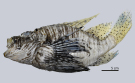
El pez león Pterois volitans (Linnaeus, 1758) es una especie invasora que ha colonizado ampliamente el Atlántico occidental y sus poblaciones han incrementado en número y tamaño en comparación con las de sus áreas nativas. Se presenta el registro de talla corporal máximo reportado para las aguas mexicanas y del golfo de México, con base en un ejemplar de 430 mm de longitud total capturado en la plataforma continental de Alvarado, Veracruz. Se compara con los registros de talla para la especie reportados en México.
##plugins.themes.bootstrap3.article.details##
Palabras Clave
especie no nativa, especie invasora, golfo de México, pez león colorado, Veracruz
Referencias
Aguilar-Medrano, R., & Vega-Cendejas, M. E. (2020). Size, weight, and diet on of the invasive lionfish Pterois volitans (Linnaeus, 1758) on the southern coast of Veracruz, Gulf of Mexico. Ciencias Marinas, 46(1), 57–64. https://doi.org/10.7773/cm.v46i1.3012
Aguilar-Perera, A., & Quijano-Puerto, L. (2016). Relations between fish length to weight, and otolith length and weight, of the lionfish Pterois volitans, in the Parque Nacional Arrecife Alacranes, southern Gulf of Mexico. Revista de Biología Marina y Oceanografía, 51(2), 469–474. https://doi.org/10.4067/S0718-19572016000200025
Aguilar-Perera, A., & Tuz-Sulub, A. (2010). Non-native, invasive red lionfish (Pterois volitans [Linnaeus, 1758]: Scorpaenidae), is first recorded in the southern Gulf of Mexico, off the northern Yucatan Peninsula, Mexico. Aquatic Invasions, 5, S9–S12.
https://doi.org/10.3391/ai.2010.5.S1.003
Aguilar-Perera, A., Tuz-Sulub, A., Perera-Chan, L., López-Gómez, M. J., Triste, X. G., & Flota, E. C. (2012). Lionfish invasion off the northern coast of the Yucatan Peninsula, Mexico, Southern Gulf of Mexico: What do we know? Proceedings of the Gulf and Caribbean Fisheries Institute, 64, 34–38.
Aguilar-Perera, A., Perera-Chan, L., & Quijano-Puerto, L. (2013). Record body size for the red lionfish, Pterois volitans (Scorpaeniformes), in the Southern Gulf of Mexico. Gulf and Caribbean Research, 25, 121–123. https://doi.org/10.18785/gcr.2501.10
Albins, M. A., & Hixon, M. A. (2011). Worst case scenario: potential long-term effects of invasive predatory lionfish (Pterois volitans) on Atlantic and Caribbean coral-reef communities. Environmental Biology of Fishes, 96, 1151–1157. https://doi.org/10.1007/s10641-011-9795-1
Andradi-Brown, D. A., Grey, R., Hendrix, A., Hitchner, D., Hunt, C. L., Gress, E., Madej, K., Parry, R. L., Régnier-McKellar, C., Jones, O. P., Arteaga, M., Izaguirre, A. P., Rogers, A. D., & Exton, D. A. (2017). Depth-dependent effects of culling-do mesophotic lionfish populations undermine current management? Royal Society Open Science, 4(5), 170027. https://doi.org/10.1098/rsos.170027
Arredondo-Chávez, A. T., Sánchez-Jiménez, J. A., Ávila-Morales, O. G., Torres-Chávez, P., Herrerias-Diego, Y., Medina-Nava, M., Madrigal-Guridi, X., Campos-Mendoza, A., Domínguez-Domínguez, O., & Caballero-Vázquez, J. A. (2016). Spatio-temporal variation in the diet composition of red lionfish, Pterois volitans (Actinopterygii: Scorpaeniformes: Scorpaenidae), in the Mexican Caribbean: insights into the ecological effect of the alien invasion. Acta Ichthyologica et Piscatoria, 46(3), 185–200.
https://doi.org/10.3750/AIP2016.46.3.03
Arellano-Méndez, L. U., Mora-Olivo, A., Zamora-Tovar, C., & Rosa-Manzano, E. (2017). First report of the invasive red lionfish Pterois volitans (Linnaeus, 1758) (Scorpaenidae) on the coast of Tamaulipas, Mexico. BioInvasions Records, 6, 255–258.
https://doi.org/10.3391/bir.2017.6.3.11
Barbour, A. B., Allen, M. S., Frazer, T. K., & Sherman, K. D. (2011). Evaluating the potential efficacy of invasive lionfish (Pterois volitans) removals. PLoS One, 6(5), e19666.
https://doi.org/10.1371/journal.pone.0019666
Benkwitt, C. E. (2013). Density-dependent growth in invasive lionfish (Pterois volitans). PLoS One, 8, e66995. https://doi.org/10.1371/journal.pone.0066995
Blakeway, R. D., Fogg, A. Q., & Jones, G. A. (2021). Oldest Indo-Pacific lionfish (Pterois volitans/P. miles) recorded from the Northwestern Gulf of Mexico. Gulf and Caribbean Research, 32(1), 1–4. https://doi.org/10.18785/gcr.3201.01
Bogdanoff, A. K., Mostowy, J., Peake, K., Layman, C. A., Brito-Bermudez, A., González Baca, C., Hernández-Palacios, N., Martinez-Gonzalez, D. T., Bravo-XiCoténcatl, M. R., & Morris, Jr. J. A. (2018). A brief description of invasive lionfish (Pterois sp.) diet composition in the Arrecifes de Cozumel National Park. Food Webs, 17, e00104.
https://doi.org/10.1016/j.fooweb.2018.e00104
Côté, I. M. & Maljkovic´, A. (2010). Predation rates of Indo-Pacific lionfish on Bahamian coral reefs. Marine Ecology Progress Series, 404, 219–225. https://doi.org/10.3354/meps08458
Côté, I. M., Green, S. J., & Hixon, M. A. (2013). Predatory fish invaders: Insights from Indo-Pacific lionfish in the western Atlantic and Caribbean. Biological Conservation, 164,
50–61. https://doi.org/10.1016/j.biocon.2013.04.014
Darling, E. S., Green, S. J., O’Leary, J. K., & Côté, I. M. (2011). Indo–Pacific lionfish are larger and more abundant on invaded reefs: A comparison of Kenyan and Bahamian lionfish populations. Biological Invasions, 13, 2045–2051.
https://doi.org/10.1007/s10530-011-0020-0
DOF, Diario Oficial de la Federación (2014). Acuerdo por el que se da a conocer el Plan de Manejo Pesquero de Camarón Café (Farfantepenaeus aztecus) y Camarón Blanco (Litopenaeus setiferus) en las costas de Tamaulipas y Veracruz. 12 marzo 2014 [En línea] https://www.gob.mx/cms/uploads/attachment/file/481591/PMP_Camaron_cafe_tamps_ver.pdf. (24 Dec 2022).
Ehemann, N. R. (2017). A new western Atlantic size record for Pterois volitans (Actinopterygii: Scorpaeniformes: Scorpaenidae) with new morphological data on head spinules. Acta Ichthyological et Piscatoria, 47, 297–301. https://doi.org/10.3750/AIEP/02149
Fogg, A. Q., Hoffmayer, E. R., Driggers, W. B. III, Campbell, M. D., Pellegrin, G. J., & Stein, W. (2013). Distribution and length frequency of invasive lionfish (Pterois sp.) in the norther Gulf of Mexico. Gulf and Caribbean Research, 25, 111–115.
https://doi.org/10.18785/gcr.2501.08
Frazer, T. K., Jacoby, C. A., Edwards, M. A., Barry, S. C., & Manfrino, C. M. (2012). Coping with the lionfish invasion: can targeted removals yield beneficial effects? Reviews in Fisheries Science, 20, 185–191. https://doi.org/10.1080/10641262.2012.700655
Jennings, S., Pinnegar, J. K., Polunin, N. V. C., & Boon, T. W. (2001). Weak cross-species relationships between body size and trophic level belie powerful size-based trophic structuring in fish communities. Journal of Animal Ecology, 70, 934–944.
https://doi.org/10.1046/j.0021-8790.2001.00552.x
Kulbicki, M., Beets, J., Chabanet, P., Cure, K., Darling, E., Floeter, S. R., Galzin, R., Green, A., Harmelin-Viven, M., Hixon, M., Letourneur, Y., Lison de Loma, T., McClanahan, T., McIlwain, J., MouTham, G., Myers, R., O’LearY, J. K., Planes, S., Vigliola, L., & Wantiez, L. (2012). Distributions of Indo-Pacific lionfishes Pterois spp. in their native ranges: implications for the Atlantic invasion. Marine Ecology Progress Series, 446, 189–205. https://doi.org/10.3354/meps09442
Luiz, O. J., dos Santos, W. C. R., Marceniuk, A. P., Rocha, L. A., Floeter, S. R., Buck, C. E., de Klautau, A. G. C. M., & Ferreira, C. E. L. (2021). Multiple lionfish (Pterois spp.) new occurrences along the Brazilian coast confirm the invasion pathway into the Southwestern Atlantic. Biological Invasions, 23, 3013–3019. https://doi.org/10.1007/s10530-021-02575-8
Meister, H. S., Wyanski, D. M., Loefer, J. K., Ross, S. W., Quattrini, A. M., & Sulak, K. J. (2005). Further evidence for the invasion and establishment of Pterois volitans (Teleostei: Scorpaenidae) along the Atlantic Coast of the United States. Southeastern Naturalist, 4, 193–206. https://doi.org/10.1656/1528-7092(2005)004[0193:FEFTIA]2.0.CO;2
Mindel, B. L., Neat, F. C., Trueman, C. N., Webb, T. J., & Blanchard, J. L. (2016). Functional, size and taxonomic diversity of fish along a depth gradient in the deep sea. PeerJ, 4, e2387. https://doi.org/10.7717/peerj.2387
Montoya-Mendoza, J., Camarena-Luhrs, T., Castañeda-Chávez, M. R., & Lango-Reynoso, F. (2017). Helminth parasites of red lionfish, Pterois volitans from the Veracruz Coral Reef System, Mexico, Southern Gulf of Mexico. Journal of Agricultural Science, 9, 30–33. https://doi.org/10.5539/jas.v9n11p30
Morris, Jr. J. A. (2012). Invasive lionfish: a guide to control and management. Gulf and Caribbean Fisheries Institute, Special Publication No. 1, 1–113.
Morris, J. A., & Akins, J. L. (2009). Feeding ecology of invasive lionfish (Pterois volitans) in the Bahamian archipelago. Environmental Biology of Fishes, 86, 389–398.
https://doi.org/10.1007/s10641-009-9538-8
Muñoz, R. C., Currin, C. A., & Whitfield, P. E. (2011). Diet of invasive lionfish on hard bottom reefs of the Southeast USA: insights from stomach contents and stable isotopes. Marine Ecology Progress Series, 432, 181–193. https://doi.org/10.3354/meps09154
Murillo-Pérez, B. I., Schmitter-Soto, J. J., Cibián-Rojas, D., & Herrera-Pavón, R. L. (2021). Trophic overlap of lionfish (Pterois volitans) and two native predators (Lutjanus apodus and Cephalopholis cruentata) in the western Caribbean. Biota Neotropica, 21, e20190909. https://doi.org/10.1590/1676-0611-BN-2019-0909
Perera-Chan, L. C., & Aguilar-Perera, A. (2014). Length-weight and length-length relationships of the invasive red lionfish [Pterois volitans (Linnaeus, 1758): Scorpaenidae] in the Parque Nacional Arrecife Alacranes, Southern Gulf of Mexico. Journal Applicate Ichthyology, 30, 202–203. https://doi.org/10.1111/jai.12294
Pusack, T. J., Benkwitt, C. E., Cure, K., & Kindinger, T. L. (2016). Invasive red lionfish (Pterois volitans) grow faster in the Atlantic Ocean than in their native Pacific range. Environmental Biology of Fishes, 99, 571–579. https://doi.org/10.1007/s10641-016-0499-4
Reyes-Aguilar, A. R., Castañeda-Chávez, M. R., Montoya-Mendoza, J., Lango-Reynoso, F., Zamudio-Alemán, R. E., & Ramos-Miranda, J. (2018). Morphometry of Pterois volitans (Linnaeus, 1758) in the Veracruz Reef System in the Central Zone of the Gulf of Mexico. Oceanography & Fisheries, 5, 105–107. https://doi.org/10.19080/OFOAJ.2018.05.555673
Sabido-Itzá, M. M., Medina-Quej, A., de Jesús-Navarrete, A., Gómez-Poot, J. M., & García-Rivas, M. C. (2016a). La estructura de tallas como evidencia del establecimiento de Pterois volitans (Scorpaeniformes: Scorpaenidae) en el sur del Caribe mexicano. Revista de Biología Tropical, 64, 369–378.
Sabido-Itzá, M. M., Aguilar-Perera, A., & Medina-Quej, A. (2016b). Length-weight and length-length relations, and relative condition factor of red lionfish, Pterois volitans (Actinopterygii: Scorpaeniformes: Scorpaenidae), from two natural protected areas in the Mexican Caribbean. Acta Ichthyologica et Piscatoria, 46, 279–285.
https://doi.org/10.3750/AIP2016.46.4.01
Sabido-Itzá, M. M., & García-Rivas, M. C. (2019). Record of abundance, spatial distribution and gregarious behavior of invasive lionfish Pterois spp. (Scorpaeniformes: Scorpaenidae) in coral reefs of Banco Chinchorro Biosphere Reserve, southeastern Mexico. Latin America Journal of Aquatic Research, 47, 349–355. https://doi.org/10.3856/vol47-issue2-fulltext-15
Santander-Monsalvo, J., López-Huerta, I., Aguilar-Perera, A., & Tuz-Sulub, A. (2012). First record of the red lionfish (Pterois volitans [Linnaeus, 1758]) off the coast of Veracruz, Mexico. BioInvasions Records, 1, 121–124. https://doi.org/10.3391/bir.2012.1.2.07
Schofield, P. J. (2009). Geographic extent and chronology of the invasion of non-native lionfish (Pterois volitans [Linnaeus 1758] and P. miles [Bennett 1828]) in the Western North Atlantic and Caribbean Sea. Aquatic Invasions, 4, 473–479. https://doi.org/10.3391/ai.2009.4.3.5
Schofield, P. J. (2010). Update on geographic spread of invasive lionfishes (Pterois volitans [Linnaeus, 1758] and P. miles [Bennett, 1828]) in the Western North Atlantic Ocean, Caribbean Sea and Gulf of Mexico. Aquatic Invasions, 5, 117–122.
https://doi.org/10.3391/ai.2010.5.S1.024
Schultz, E. T. (1986). Pterois volitans and Pterois miles – 2 valid species. Copeia, 1986, 686–690. https://doi.org/10.2307/1444950
Switzer, T. S., Tremain, D. M., Keenan, S. F., Stafford, C. J., Parks, S. L., & McMicheal, Jr R. H. (2015). Temporal and spatial dynamics of the Lionfish invasion in the Eastern Gulf of Mexico: perspectives from a Boradscale Trawl Survey. Marine and Coastal Fisheries, 7, 1–8. https://doi.org/10.3354/meps10383
Wakida-Kusunoki, A. T., & Amador del Ángel, L. E. (2015). First record of the red lionfish, Pterois volitans, on the coast of Tabasco, México. Hidrobiológica, 25, 307–309.
Aguilar-Perera, A., & Quijano-Puerto, L. (2016). Relations between fish length to weight, and otolith length and weight, of the lionfish Pterois volitans, in the Parque Nacional Arrecife Alacranes, southern Gulf of Mexico. Revista de Biología Marina y Oceanografía, 51(2), 469–474. https://doi.org/10.4067/S0718-19572016000200025
Aguilar-Perera, A., & Tuz-Sulub, A. (2010). Non-native, invasive red lionfish (Pterois volitans [Linnaeus, 1758]: Scorpaenidae), is first recorded in the southern Gulf of Mexico, off the northern Yucatan Peninsula, Mexico. Aquatic Invasions, 5, S9–S12.
https://doi.org/10.3391/ai.2010.5.S1.003
Aguilar-Perera, A., Tuz-Sulub, A., Perera-Chan, L., López-Gómez, M. J., Triste, X. G., & Flota, E. C. (2012). Lionfish invasion off the northern coast of the Yucatan Peninsula, Mexico, Southern Gulf of Mexico: What do we know? Proceedings of the Gulf and Caribbean Fisheries Institute, 64, 34–38.
Aguilar-Perera, A., Perera-Chan, L., & Quijano-Puerto, L. (2013). Record body size for the red lionfish, Pterois volitans (Scorpaeniformes), in the Southern Gulf of Mexico. Gulf and Caribbean Research, 25, 121–123. https://doi.org/10.18785/gcr.2501.10
Albins, M. A., & Hixon, M. A. (2011). Worst case scenario: potential long-term effects of invasive predatory lionfish (Pterois volitans) on Atlantic and Caribbean coral-reef communities. Environmental Biology of Fishes, 96, 1151–1157. https://doi.org/10.1007/s10641-011-9795-1
Andradi-Brown, D. A., Grey, R., Hendrix, A., Hitchner, D., Hunt, C. L., Gress, E., Madej, K., Parry, R. L., Régnier-McKellar, C., Jones, O. P., Arteaga, M., Izaguirre, A. P., Rogers, A. D., & Exton, D. A. (2017). Depth-dependent effects of culling-do mesophotic lionfish populations undermine current management? Royal Society Open Science, 4(5), 170027. https://doi.org/10.1098/rsos.170027
Arredondo-Chávez, A. T., Sánchez-Jiménez, J. A., Ávila-Morales, O. G., Torres-Chávez, P., Herrerias-Diego, Y., Medina-Nava, M., Madrigal-Guridi, X., Campos-Mendoza, A., Domínguez-Domínguez, O., & Caballero-Vázquez, J. A. (2016). Spatio-temporal variation in the diet composition of red lionfish, Pterois volitans (Actinopterygii: Scorpaeniformes: Scorpaenidae), in the Mexican Caribbean: insights into the ecological effect of the alien invasion. Acta Ichthyologica et Piscatoria, 46(3), 185–200.
https://doi.org/10.3750/AIP2016.46.3.03
Arellano-Méndez, L. U., Mora-Olivo, A., Zamora-Tovar, C., & Rosa-Manzano, E. (2017). First report of the invasive red lionfish Pterois volitans (Linnaeus, 1758) (Scorpaenidae) on the coast of Tamaulipas, Mexico. BioInvasions Records, 6, 255–258.
https://doi.org/10.3391/bir.2017.6.3.11
Barbour, A. B., Allen, M. S., Frazer, T. K., & Sherman, K. D. (2011). Evaluating the potential efficacy of invasive lionfish (Pterois volitans) removals. PLoS One, 6(5), e19666.
https://doi.org/10.1371/journal.pone.0019666
Benkwitt, C. E. (2013). Density-dependent growth in invasive lionfish (Pterois volitans). PLoS One, 8, e66995. https://doi.org/10.1371/journal.pone.0066995
Blakeway, R. D., Fogg, A. Q., & Jones, G. A. (2021). Oldest Indo-Pacific lionfish (Pterois volitans/P. miles) recorded from the Northwestern Gulf of Mexico. Gulf and Caribbean Research, 32(1), 1–4. https://doi.org/10.18785/gcr.3201.01
Bogdanoff, A. K., Mostowy, J., Peake, K., Layman, C. A., Brito-Bermudez, A., González Baca, C., Hernández-Palacios, N., Martinez-Gonzalez, D. T., Bravo-XiCoténcatl, M. R., & Morris, Jr. J. A. (2018). A brief description of invasive lionfish (Pterois sp.) diet composition in the Arrecifes de Cozumel National Park. Food Webs, 17, e00104.
https://doi.org/10.1016/j.fooweb.2018.e00104
Côté, I. M. & Maljkovic´, A. (2010). Predation rates of Indo-Pacific lionfish on Bahamian coral reefs. Marine Ecology Progress Series, 404, 219–225. https://doi.org/10.3354/meps08458
Côté, I. M., Green, S. J., & Hixon, M. A. (2013). Predatory fish invaders: Insights from Indo-Pacific lionfish in the western Atlantic and Caribbean. Biological Conservation, 164,
50–61. https://doi.org/10.1016/j.biocon.2013.04.014
Darling, E. S., Green, S. J., O’Leary, J. K., & Côté, I. M. (2011). Indo–Pacific lionfish are larger and more abundant on invaded reefs: A comparison of Kenyan and Bahamian lionfish populations. Biological Invasions, 13, 2045–2051.
https://doi.org/10.1007/s10530-011-0020-0
DOF, Diario Oficial de la Federación (2014). Acuerdo por el que se da a conocer el Plan de Manejo Pesquero de Camarón Café (Farfantepenaeus aztecus) y Camarón Blanco (Litopenaeus setiferus) en las costas de Tamaulipas y Veracruz. 12 marzo 2014 [En línea] https://www.gob.mx/cms/uploads/attachment/file/481591/PMP_Camaron_cafe_tamps_ver.pdf. (24 Dec 2022).
Ehemann, N. R. (2017). A new western Atlantic size record for Pterois volitans (Actinopterygii: Scorpaeniformes: Scorpaenidae) with new morphological data on head spinules. Acta Ichthyological et Piscatoria, 47, 297–301. https://doi.org/10.3750/AIEP/02149
Fogg, A. Q., Hoffmayer, E. R., Driggers, W. B. III, Campbell, M. D., Pellegrin, G. J., & Stein, W. (2013). Distribution and length frequency of invasive lionfish (Pterois sp.) in the norther Gulf of Mexico. Gulf and Caribbean Research, 25, 111–115.
https://doi.org/10.18785/gcr.2501.08
Frazer, T. K., Jacoby, C. A., Edwards, M. A., Barry, S. C., & Manfrino, C. M. (2012). Coping with the lionfish invasion: can targeted removals yield beneficial effects? Reviews in Fisheries Science, 20, 185–191. https://doi.org/10.1080/10641262.2012.700655
Jennings, S., Pinnegar, J. K., Polunin, N. V. C., & Boon, T. W. (2001). Weak cross-species relationships between body size and trophic level belie powerful size-based trophic structuring in fish communities. Journal of Animal Ecology, 70, 934–944.
https://doi.org/10.1046/j.0021-8790.2001.00552.x
Kulbicki, M., Beets, J., Chabanet, P., Cure, K., Darling, E., Floeter, S. R., Galzin, R., Green, A., Harmelin-Viven, M., Hixon, M., Letourneur, Y., Lison de Loma, T., McClanahan, T., McIlwain, J., MouTham, G., Myers, R., O’LearY, J. K., Planes, S., Vigliola, L., & Wantiez, L. (2012). Distributions of Indo-Pacific lionfishes Pterois spp. in their native ranges: implications for the Atlantic invasion. Marine Ecology Progress Series, 446, 189–205. https://doi.org/10.3354/meps09442
Luiz, O. J., dos Santos, W. C. R., Marceniuk, A. P., Rocha, L. A., Floeter, S. R., Buck, C. E., de Klautau, A. G. C. M., & Ferreira, C. E. L. (2021). Multiple lionfish (Pterois spp.) new occurrences along the Brazilian coast confirm the invasion pathway into the Southwestern Atlantic. Biological Invasions, 23, 3013–3019. https://doi.org/10.1007/s10530-021-02575-8
Meister, H. S., Wyanski, D. M., Loefer, J. K., Ross, S. W., Quattrini, A. M., & Sulak, K. J. (2005). Further evidence for the invasion and establishment of Pterois volitans (Teleostei: Scorpaenidae) along the Atlantic Coast of the United States. Southeastern Naturalist, 4, 193–206. https://doi.org/10.1656/1528-7092(2005)004[0193:FEFTIA]2.0.CO;2
Mindel, B. L., Neat, F. C., Trueman, C. N., Webb, T. J., & Blanchard, J. L. (2016). Functional, size and taxonomic diversity of fish along a depth gradient in the deep sea. PeerJ, 4, e2387. https://doi.org/10.7717/peerj.2387
Montoya-Mendoza, J., Camarena-Luhrs, T., Castañeda-Chávez, M. R., & Lango-Reynoso, F. (2017). Helminth parasites of red lionfish, Pterois volitans from the Veracruz Coral Reef System, Mexico, Southern Gulf of Mexico. Journal of Agricultural Science, 9, 30–33. https://doi.org/10.5539/jas.v9n11p30
Morris, Jr. J. A. (2012). Invasive lionfish: a guide to control and management. Gulf and Caribbean Fisheries Institute, Special Publication No. 1, 1–113.
Morris, J. A., & Akins, J. L. (2009). Feeding ecology of invasive lionfish (Pterois volitans) in the Bahamian archipelago. Environmental Biology of Fishes, 86, 389–398.
https://doi.org/10.1007/s10641-009-9538-8
Muñoz, R. C., Currin, C. A., & Whitfield, P. E. (2011). Diet of invasive lionfish on hard bottom reefs of the Southeast USA: insights from stomach contents and stable isotopes. Marine Ecology Progress Series, 432, 181–193. https://doi.org/10.3354/meps09154
Murillo-Pérez, B. I., Schmitter-Soto, J. J., Cibián-Rojas, D., & Herrera-Pavón, R. L. (2021). Trophic overlap of lionfish (Pterois volitans) and two native predators (Lutjanus apodus and Cephalopholis cruentata) in the western Caribbean. Biota Neotropica, 21, e20190909. https://doi.org/10.1590/1676-0611-BN-2019-0909
Perera-Chan, L. C., & Aguilar-Perera, A. (2014). Length-weight and length-length relationships of the invasive red lionfish [Pterois volitans (Linnaeus, 1758): Scorpaenidae] in the Parque Nacional Arrecife Alacranes, Southern Gulf of Mexico. Journal Applicate Ichthyology, 30, 202–203. https://doi.org/10.1111/jai.12294
Pusack, T. J., Benkwitt, C. E., Cure, K., & Kindinger, T. L. (2016). Invasive red lionfish (Pterois volitans) grow faster in the Atlantic Ocean than in their native Pacific range. Environmental Biology of Fishes, 99, 571–579. https://doi.org/10.1007/s10641-016-0499-4
Reyes-Aguilar, A. R., Castañeda-Chávez, M. R., Montoya-Mendoza, J., Lango-Reynoso, F., Zamudio-Alemán, R. E., & Ramos-Miranda, J. (2018). Morphometry of Pterois volitans (Linnaeus, 1758) in the Veracruz Reef System in the Central Zone of the Gulf of Mexico. Oceanography & Fisheries, 5, 105–107. https://doi.org/10.19080/OFOAJ.2018.05.555673
Sabido-Itzá, M. M., Medina-Quej, A., de Jesús-Navarrete, A., Gómez-Poot, J. M., & García-Rivas, M. C. (2016a). La estructura de tallas como evidencia del establecimiento de Pterois volitans (Scorpaeniformes: Scorpaenidae) en el sur del Caribe mexicano. Revista de Biología Tropical, 64, 369–378.
Sabido-Itzá, M. M., Aguilar-Perera, A., & Medina-Quej, A. (2016b). Length-weight and length-length relations, and relative condition factor of red lionfish, Pterois volitans (Actinopterygii: Scorpaeniformes: Scorpaenidae), from two natural protected areas in the Mexican Caribbean. Acta Ichthyologica et Piscatoria, 46, 279–285.
https://doi.org/10.3750/AIP2016.46.4.01
Sabido-Itzá, M. M., & García-Rivas, M. C. (2019). Record of abundance, spatial distribution and gregarious behavior of invasive lionfish Pterois spp. (Scorpaeniformes: Scorpaenidae) in coral reefs of Banco Chinchorro Biosphere Reserve, southeastern Mexico. Latin America Journal of Aquatic Research, 47, 349–355. https://doi.org/10.3856/vol47-issue2-fulltext-15
Santander-Monsalvo, J., López-Huerta, I., Aguilar-Perera, A., & Tuz-Sulub, A. (2012). First record of the red lionfish (Pterois volitans [Linnaeus, 1758]) off the coast of Veracruz, Mexico. BioInvasions Records, 1, 121–124. https://doi.org/10.3391/bir.2012.1.2.07
Schofield, P. J. (2009). Geographic extent and chronology of the invasion of non-native lionfish (Pterois volitans [Linnaeus 1758] and P. miles [Bennett 1828]) in the Western North Atlantic and Caribbean Sea. Aquatic Invasions, 4, 473–479. https://doi.org/10.3391/ai.2009.4.3.5
Schofield, P. J. (2010). Update on geographic spread of invasive lionfishes (Pterois volitans [Linnaeus, 1758] and P. miles [Bennett, 1828]) in the Western North Atlantic Ocean, Caribbean Sea and Gulf of Mexico. Aquatic Invasions, 5, 117–122.
https://doi.org/10.3391/ai.2010.5.S1.024
Schultz, E. T. (1986). Pterois volitans and Pterois miles – 2 valid species. Copeia, 1986, 686–690. https://doi.org/10.2307/1444950
Switzer, T. S., Tremain, D. M., Keenan, S. F., Stafford, C. J., Parks, S. L., & McMicheal, Jr R. H. (2015). Temporal and spatial dynamics of the Lionfish invasion in the Eastern Gulf of Mexico: perspectives from a Boradscale Trawl Survey. Marine and Coastal Fisheries, 7, 1–8. https://doi.org/10.3354/meps10383
Wakida-Kusunoki, A. T., & Amador del Ángel, L. E. (2015). First record of the red lionfish, Pterois volitans, on the coast of Tabasco, México. Hidrobiológica, 25, 307–309.
Sección
Notas
Derechos de Autor

Esta obra está bajo una licencia internacional Creative Commons Atribución-NoComercial 4.0.
Cómo citar
Del Moral-Flores, L. F., Wakida-Kusunoki, A. T., Anislado-Tolentino, V., & Rosales-Vásquez, J. I. (2026). Registros del tamaño corporal máximo del pez león, Pterois volitans (Scorpaenidae), especie invasora registrada en México. Novitates Caribaea, (27), 57–66. https://doi.org/10.33800/nc.vi27.389
Métricas del artículo
- 557 Vistas Resumen vistas
- 233 Descargas PDF Descargas
- 0 Vistas Html Vistas
Descargas
Los datos de descargas todavía no están disponibles.